Japanese snowball (Viburnum plicatum f. plicatum), commonly known as Oodemari in Japan, is a deciduous shrub prized for its large, rounded, white flower clusters that bloom in late spring.
Japanese snowball (Viburnum plicatum var. plicatum f. plicatum): https://en.wikipedia.org/wiki/Viburnum_plicatum; https://mikawanoyasou.org/data/oodemari.htm
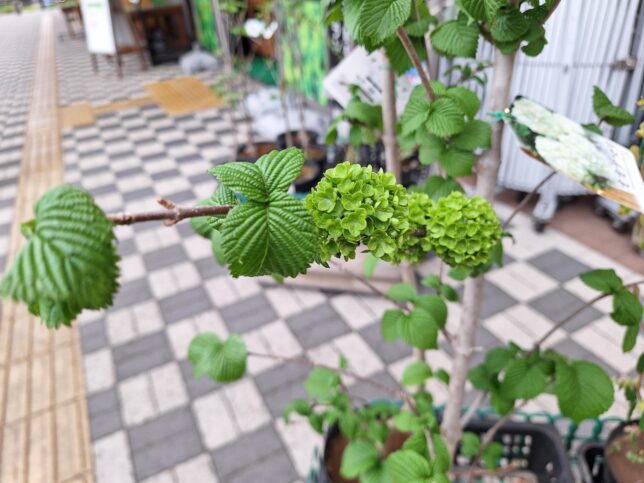
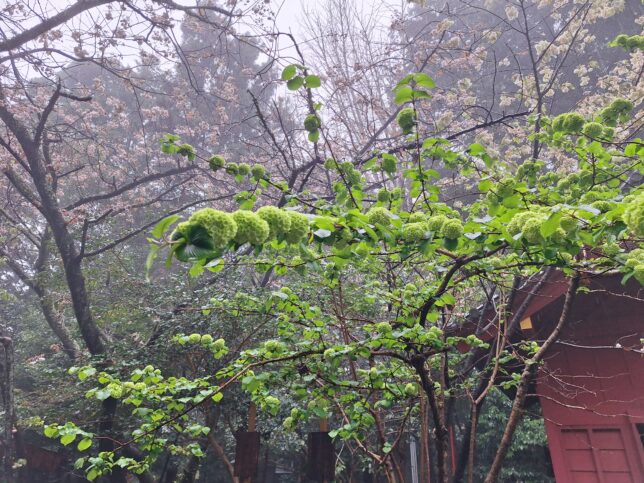
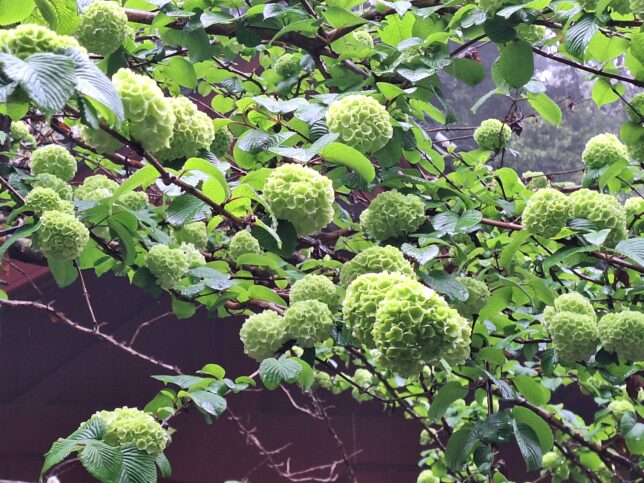
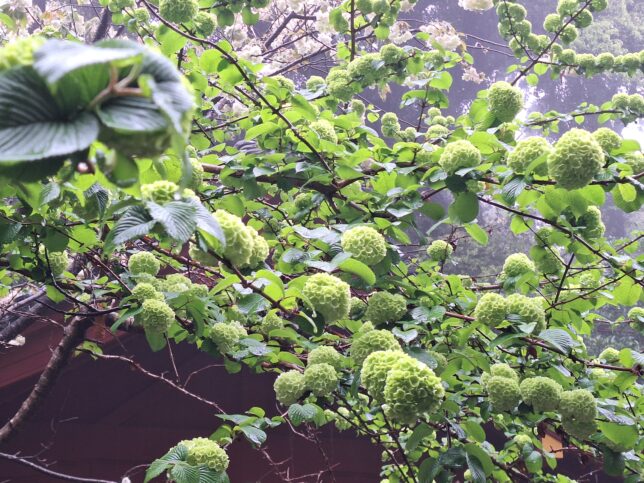
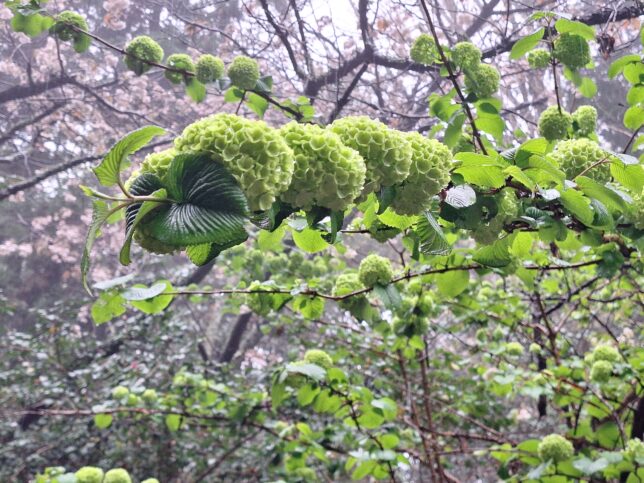
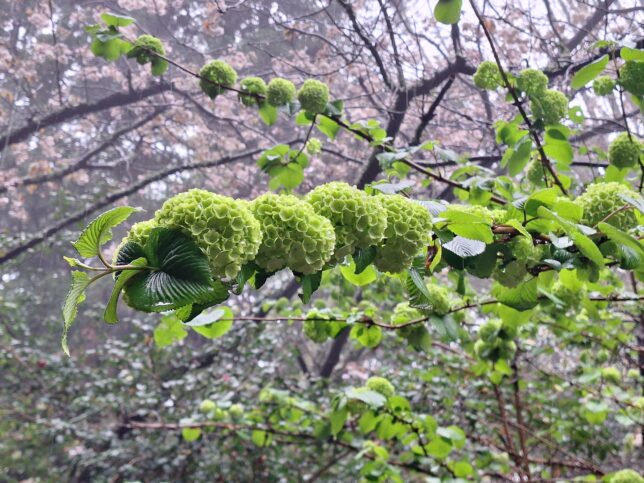
Japanese snowball plants, Road Station Nanbu, Nanbu-cho, Yamanashi, 4/10/2026; Japanese snowball trees, Mount Kuno Tosho Shrine, Suruga-ku, Shizuoka-shi, Shizuoka, 4/10/2026
Nanbu town, Yamanashi: https://en.wikipedia.org/wiki/Nanbu,_Yamanashi
Futaba-aoi or Kamo-aoi (Asarum caulescens, syn. Japonasarum caulescens) is a low-growing, deciduous, perennial herb in the Aristolochiaceae family. It is native to Japan (and parts of China), featuring creeping rhizomes, heart-shaped leaves in pairs, and small, purple-brown, bell-shaped flowers hidden beneath the foliage in spring. It is culturally important in Japan, known as the plant that inspired the design of the Tokugawa family crest (Mitsuba Aoi) and used in the Kamo Shrine’s Aoi Festival in the city of Kyoto, Japan. Asarum: https://en.wikipedia.org/wiki/Asarum; Futaba-aoi: https://mikawanoyasou.org/data/hutabaaoi.htm; https://ja.wikipedia.org/wiki/%E3%83%95%E3%82%BF%E3%83%90%E3%82%A2%E3%82%AA%E3%82%A4
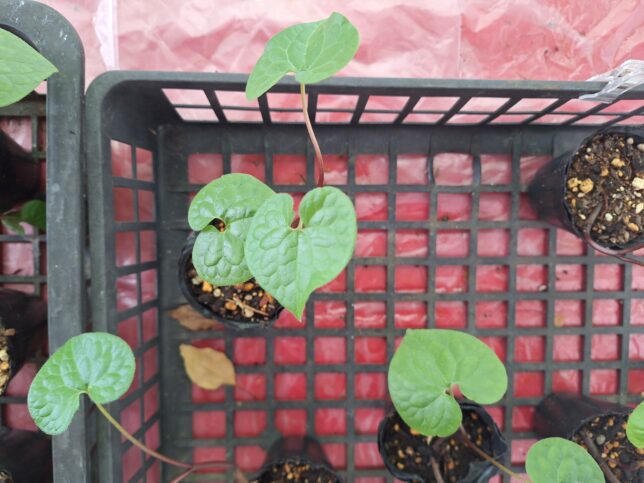
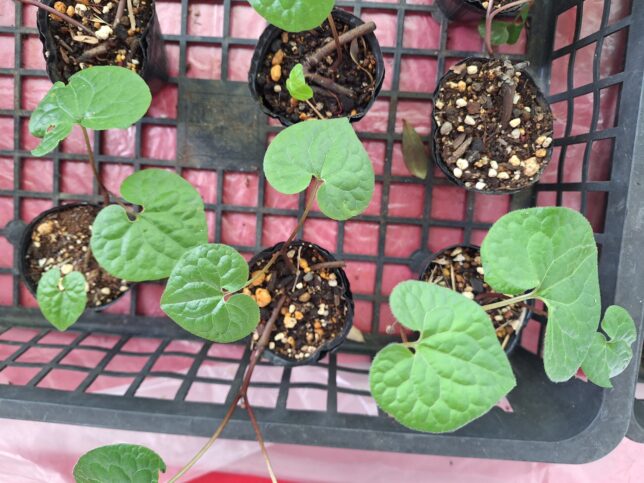
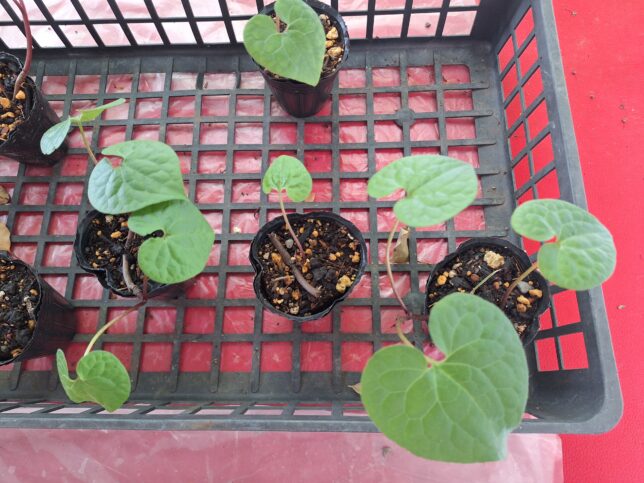
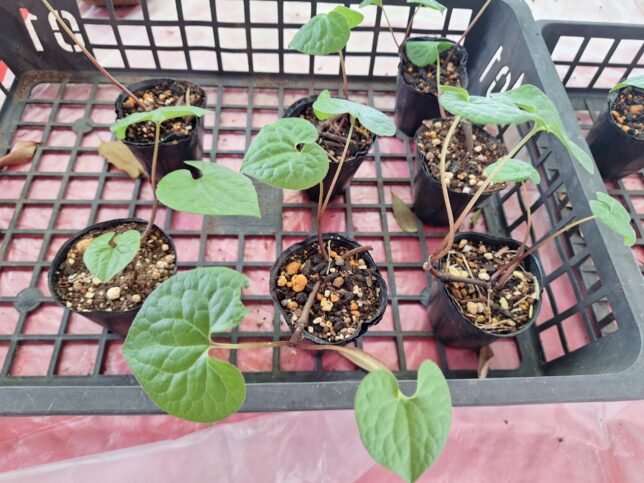
Asarum caulescens (futaba-aoi) seedlings, Mount Kuno Tosho Shrine, Suruga-ku, Shizuoka-shi, Shizuoka, 4/13/2026

The mon of the Tokugawa shogunate, three aoi leaves inside a circle