
Japanese shrub mint and fuki (Japanese butterbur) are both distinct perennial plants native to East Asia. While they are both shade-loving woodland plants, they belong to entirely different botanical families and offer vastly different culinary and visual characteristics.
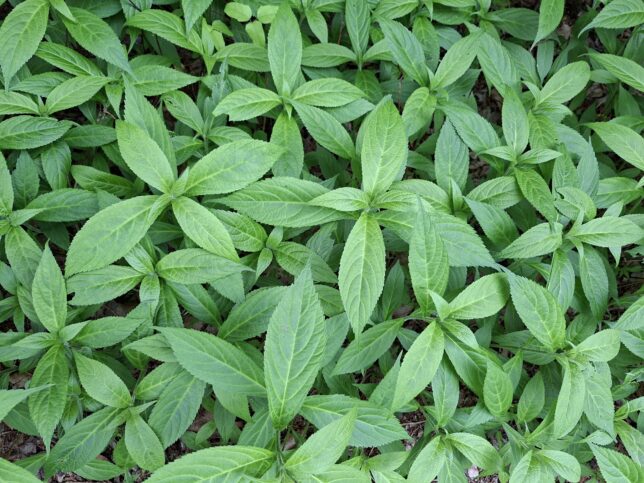
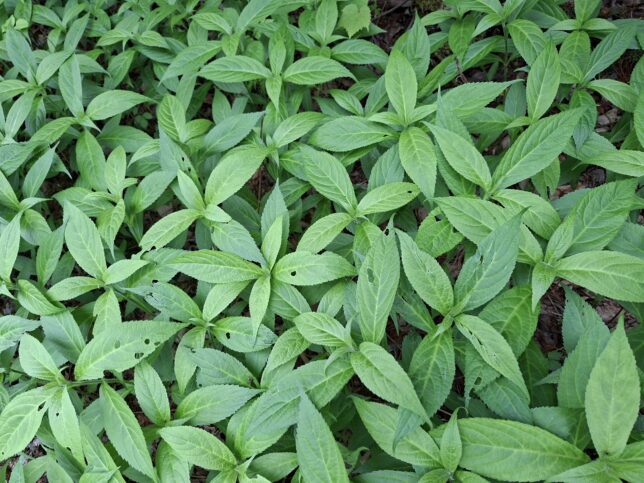
Japanese shrub mint, near Narusawa Ice Cave, Narusawa-mura, Yamanashi, 5/28/2026
Japanese shrub mint (Leucosceptrum japonicum): https://en.wikipedia.org/wiki/Leucosceptrum; https://www.missouribotanicalgarden.org/PlantFinder/PlantFinderDetails.aspx?taxonid=359581&isprofile=0&pt=8&mv=11
Tenninsou, Japanese shrub mint, scientifically known as Leucosceptrum japonicum is a perennial plant native to Japan belonging to the mint family (Lamiaceae). It is primarily utilized for ornamental landscaping and gardening and for cut flowers and floral arrangements.
It is highly valued as a “shade plant” (for shaded or woodland gardens) due to its excellent shade tolerance and bright, attractive foliage. Cultivars like the ‘Golden Angel’ are popular choices to brighten up dark areas in gardens. It blooms in late summer to autumn with dense, elegant spikes of pale yellow or white flowers; therefore, it is commonly used as a cut flower or as an autumn flower for traditional Japanese tea ceremonies (chabana).
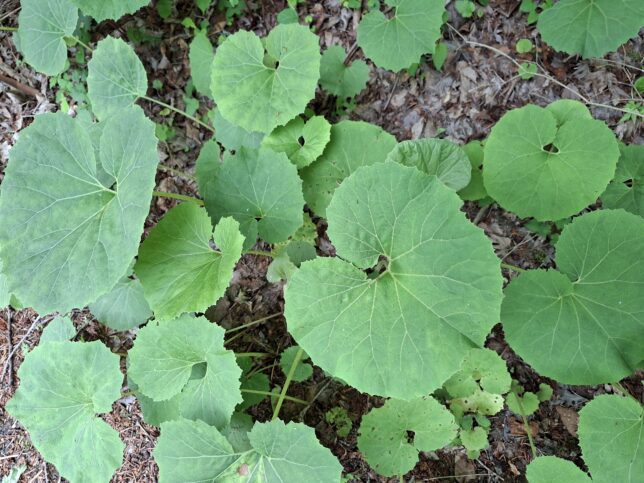
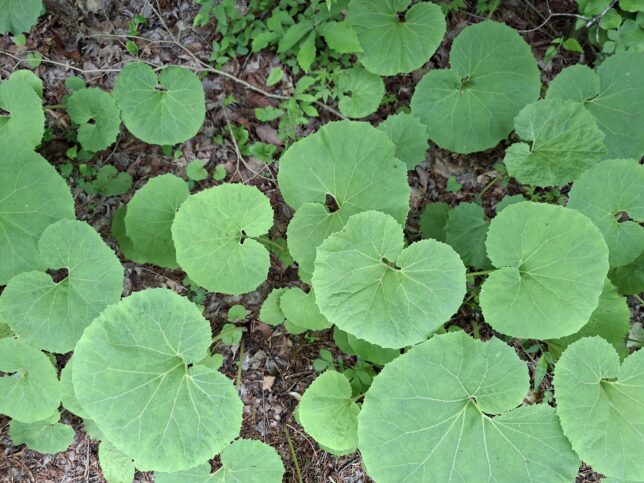
Fuki (Butterbur), near Narusawa Ice Cave, Narusawa-mura, Yamanashi, 5/28/2026
Butterbur (Petasites japonicus): https://en.wikipedia.org/wiki/Petasites_japonicus; https://www.missouribotanicalgarden.org/PlantFinder/PlantFinderDetails.aspx?kempercode=a645; (In Japanese) https://nikko-bg.jp/nikko-old/5_jokyo/species/Petasites_japonicus.html
In Japanese cuisine, fuki, Japanese butterbur, is highly prized for its crisp texture and refreshing, earthy bitterness. It serves as a seasonal delicacy, with both the stalks and the early flower buds utilized in a variety of traditional and modern dishes.
Because fuki contains natural astringency, the stalks and buds must always be boiled and soaked in cold water before eating.
1. The Stalks (Fuki)
The long, slender stalks are the most commonly eaten part of the plant. After boiling, the fibrous outer skin is peeled away to reveal a pale green, tender stalk that is used in:
- Simmered Dishes (Fuki-no-nitsuke): The stalks are simmered with dashi (Japanese soup stock, broth), soy sauce, and mirin (a sweet, syrupy Japanese rice wine used as a fundamental seasoning) to absorb delicate flavors.
- Stir-fries (Kinpira): Strips of stalks are stir-fried with sesame oil, soy sauce, and sugar to make a sweet-spicy side dish.
- Mixed Rice (Takikomi Gohan): Chopped, cooked fuki stalks (and sometimes leaves) are mixed into steamed rice along with ingredients like soy sauce and fried tofu.
- Pickles: The stalks can be pickled or preserved in soy sauce for long-term storage.
2. The Flower Buds (Fukinoto)
Appearing in late winter to early spring, these flower buds are cherished as the very first sign of spring. They are known for their strong, pleasant bitterness.
- Tempura: The buds are coated in a light batter and deep-fried, offering a crispy texture and a rich flavor that pairs perfectly with salt.
- Fuki-miso: The buds are finely chopped, sautéed, and mixed with miso, sugar, and sake. This thick, savory, and bitter paste is an excellent accompaniment for steamed rice or grilled tofu.
Mirin: https://en.wikipedia.org/wiki/Mirin; https://www.kikkoman.com/en/cookbook/glossary/mirin.html