
Haru no Nanakusa (In Japanese) translates to the Seven Herbs of Spring, which are edible plants eaten in a rice porridge (Nanakusa-gayu) on January 7th for good health, symbolizing new life and bringing color to the winter table. The individual herbs are Seri (Japanese parsley), Nazuna (shepherd’s purse), Gogyo (cudweed/jersey cudweed), Hakobera (chickweed), Hotokenoza (henbit deadnettle), Suzuna (turnip greens), and Suzushiro (daikon radish greens).
Nanakusa no sekku is one of the long-standing Japanese customs. The day of January 7 is called Jinjitsu (Human Day) and one of the five seasonal festivals (In Japanese go-sekku) that were integrated into the Japanese Imperial calendar over 1,000 years ago. Sekku is the term given meaning special day of observancen. The custom is to ensure good health and to ward off away evil spirits in the coming new year.
https://en.wikipedia.org/wiki/Nanakusa-no-sekku; https://web-japan.org/kidsweb/explore/calendar/january/nanakusa.html; https://en.wikipedia.org/wiki/Jinjitsu; https://en.wikipedia.org/wiki/Gosekku
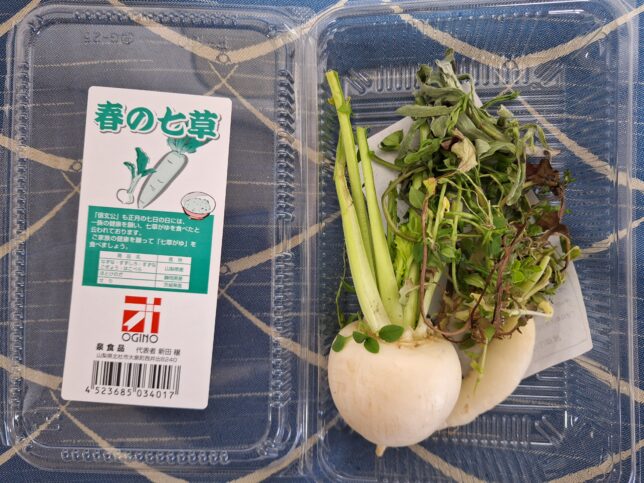
A set of seven herbs, produce of Izumi Shokuhin in the city of Hokuto and sold by Ogino Co., Ltd. in Yamanashi Prefecture, Kofu, Yamanashi, 01/07/2026
Izumi Shokuhin: (In Japanese) https://9499349888.amebaownd.com/pages/5031555/profile; OGINO: (In Japanese) https://www.ogino.co.jp/
Also, please visit my previous articles:
https://yamanashietsuo.net/having-the-seven-herbs-of-spring-2025/;
https://yamanashietsuo.net/having-the-seven-herbs-of-spring/