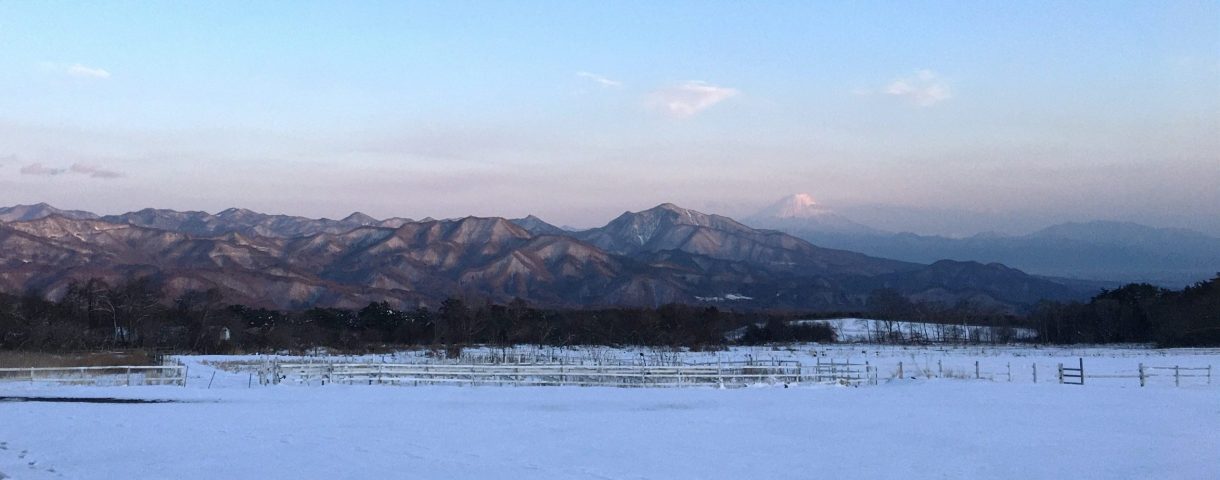
Ameya Yokocho, commonly known as “Ameyoko,” is a shopping district in Ueno, Tokyo, Japan, with its bustling, old-Tokyo atmosphere, diverse and discounted goods, and wide variety of street food and international cuisine. It provides an energetic and authentic experience of local Japanese commercial culture that contrasts with the more modern parts of Tokyo.
https://www.gotokyo.org/en/spot/71/index.html; https://joyn.tokyo/life-guide/tokyo/ueno-guide
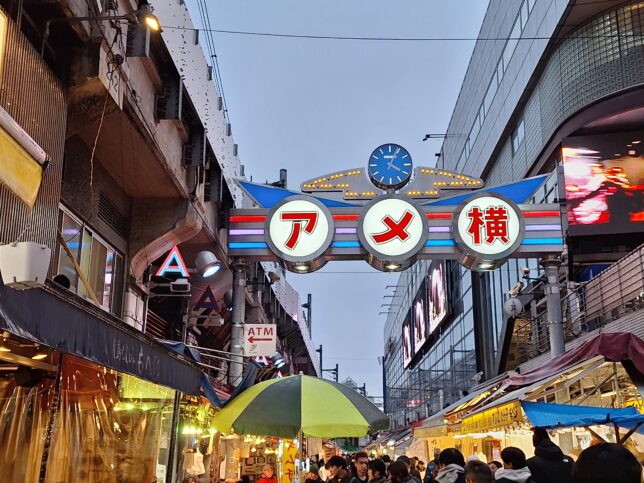
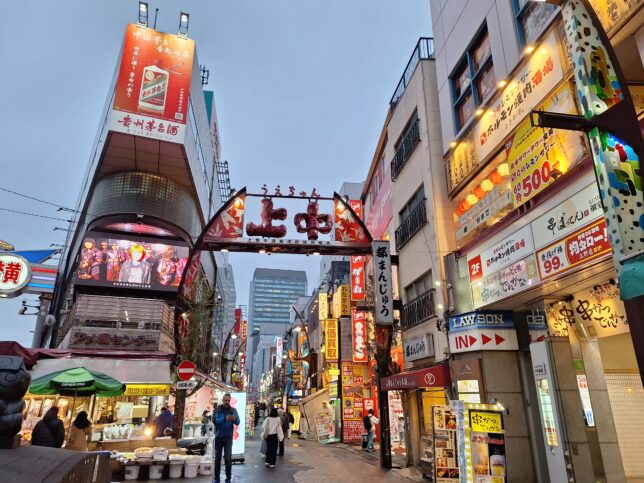
Ameyoko District in Ueno, Taito-ward, Tokyo, 12/24/2025
About the historical part of Ueno:
Ueno Tosho Shrine: https://www.uenotoshogu.com/en; https://en.wikipedia.org/wiki/Ueno_T%C5%8Dsh%C5%8D-g%C5%AB
Ueno Tosho Shrine is a Shinto shrine built in 1627 to commemorate Tokugawa Ieyasu, the first Shogun of the Tokugawa Shogunate in the Edo period. The existing shrine building was rebuilt by the third Shogun, Tokugawa Iemitsu, the grandson of Ieyasu in 1651. The architectural style of the shrine is “gongen-zukuri,” a representative architectural style of the Edo period. https://en.wikipedia.org/wiki/Ishi-no-ma-zukuri
There are a lot of copper and stone lanterns at Ueno Tosho Shrine. They represent loyalty, spiritual guidance, and offerings of light (dōmyō kuyō) from feudal lords (daimyo) to honor Tokugawa Ieyasu, symbolizing their devotion. Even though they’re no longer lit, they serve as grand historical markers of the Edo period’s power and faith. About 250 lanterns were donated from all over Japan by various daimyo, who competed to see who could offer the most magnificent contribution. There are 48 copper lanterns and about 200 stone lanterns at Ueno Tosho Shrine.
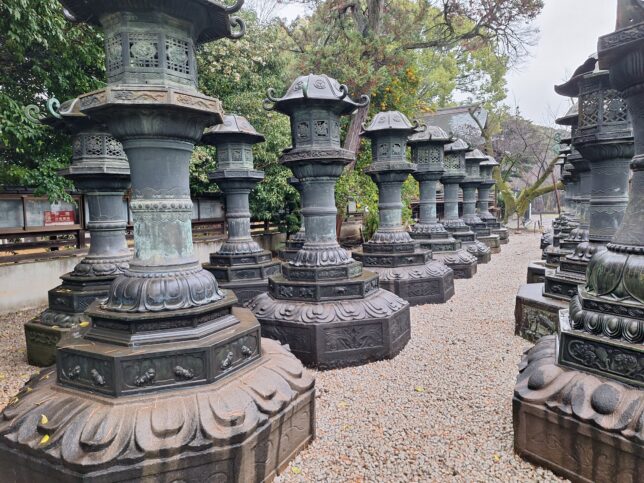
The copper lanterns representing the power of the Tokugawa Shogunate : https://en.wikipedia.org/wiki/Tokugawa_shogunate; https://en.wikipedia.org/wiki/Stone_lantern, Ueno Tosho Shrine, Taito-ward, Tokyo, 12/24/2025
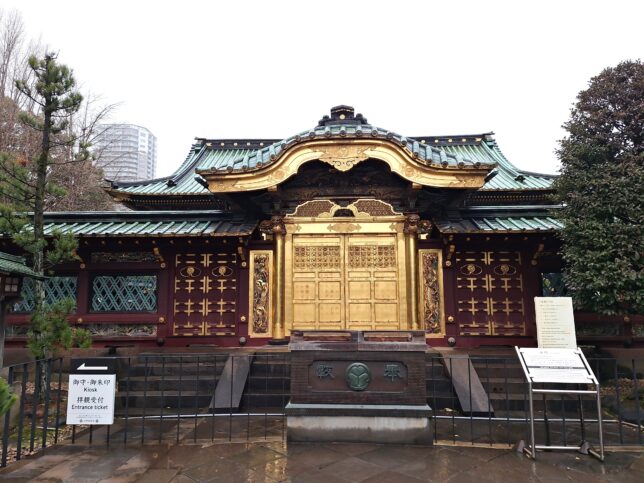
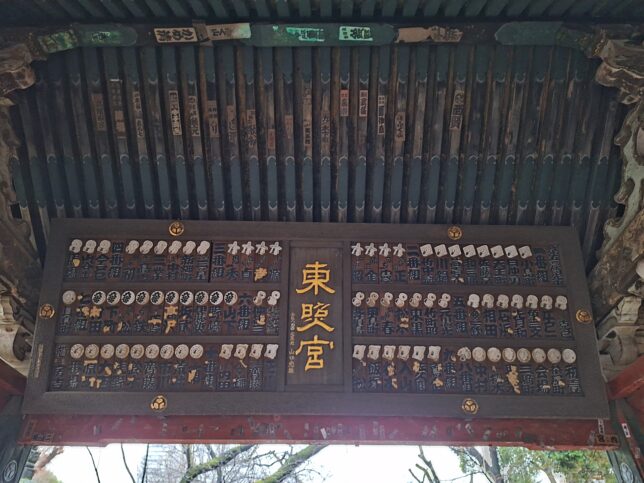
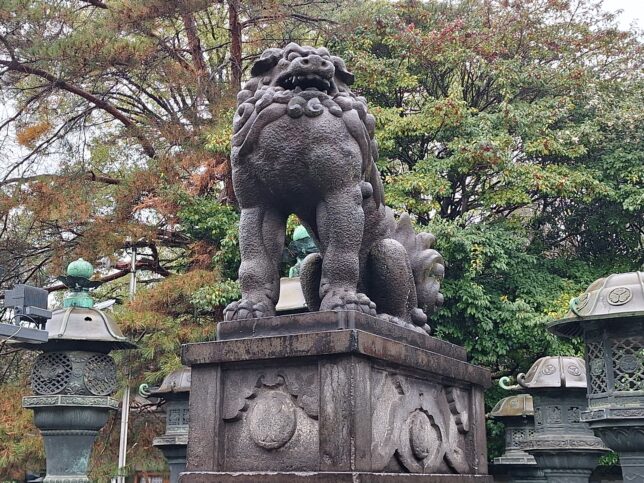
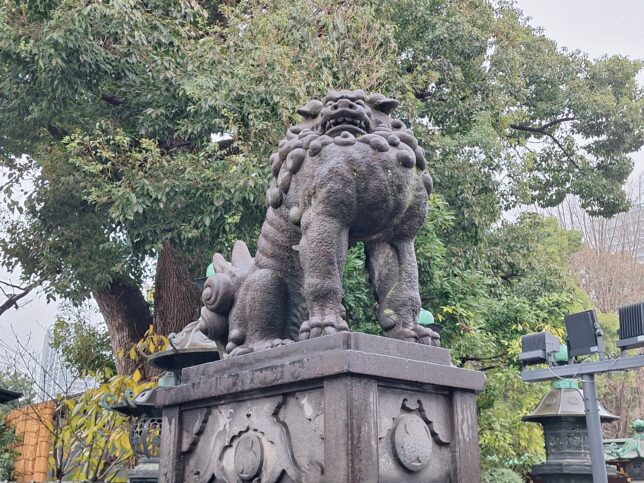
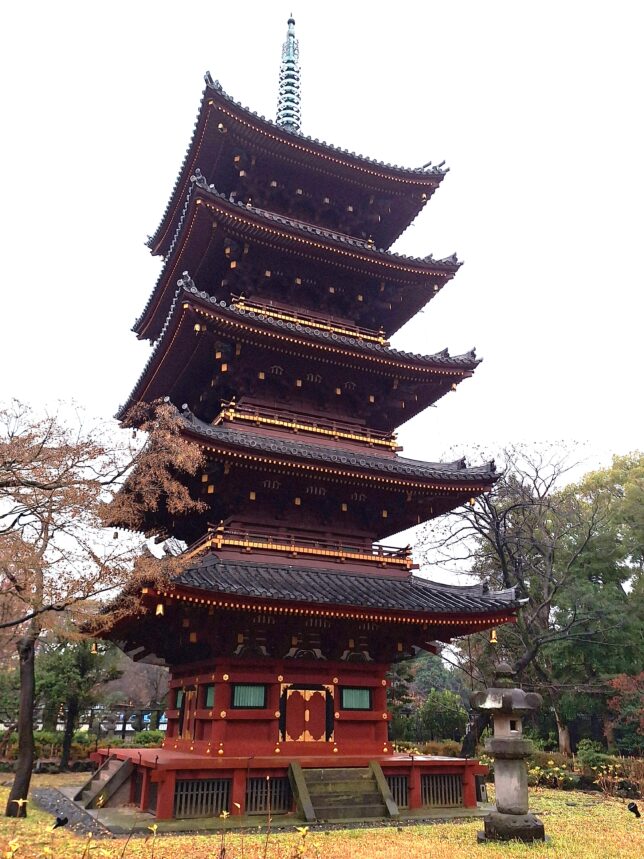
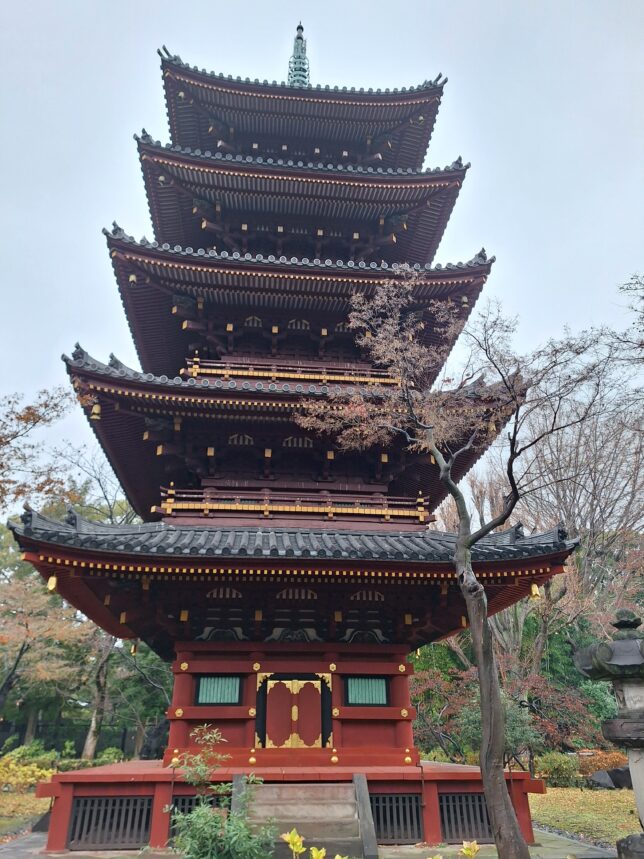
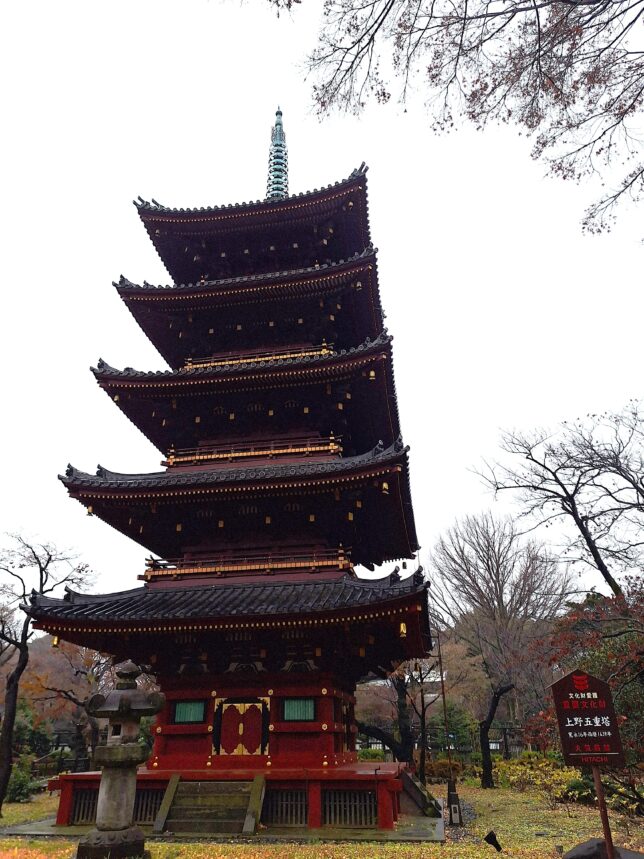
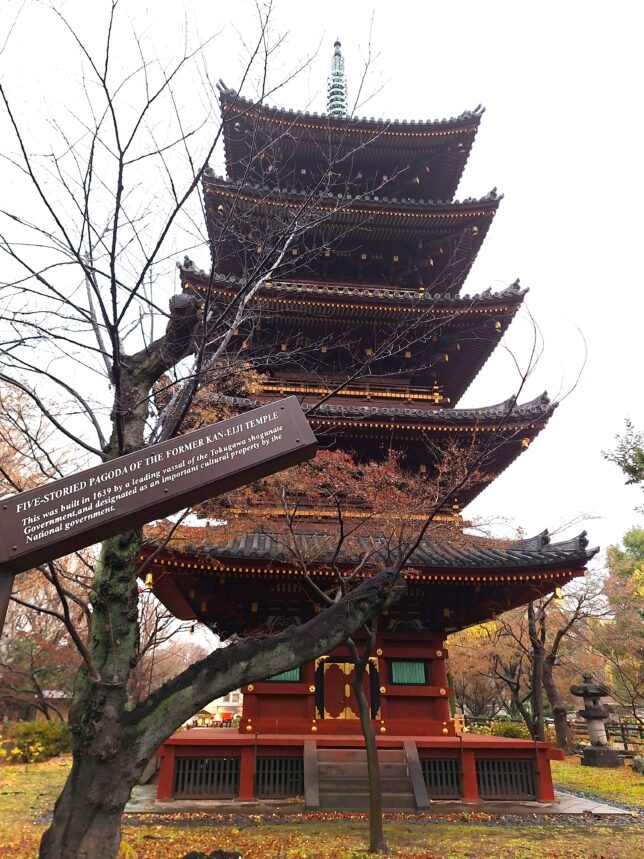
Ueno Tosho Shrine, Guguardian Lions, and Five-Storied Pagoda, Ueno Zoo, Ueno Park, Ueno, Taito-ward, Tokyo, 12/24/2025
Komainu or Guardian Lions: https://en.wikipedia.org/wiki/Komainu; https://en.wikipedia.org/wiki/Chinese_guardian_lions
The five-storied pagoda belonged to Kanei Temple. https://en.wikipedia.org/wiki/Kan%27ei-ji
Five-Storied Pagoda at Horyu Temple: https://www.horyuji.or.jp/en/garan/gojyunoto
Significance and Positioning of the Tosho Shrines
Mount Kuno Tosho Shrine, Nikko Tosho Shrine, Ueno Tosho Shrine, these three shrines are all dedicated to Tokugawa Ieyasu, who was deified after his death with the name Tōshō Daigongen. Their respective positions are as follows:
Mount Kuno Tosho Shrine: The original burial place. Ieyasu requested in his will that he be buried on Mount Kuno immediately after his death in 1616 to become the guardian deity of peace for Japan. It is the oldest Toshogu shrine and a National Treasure.
Nikko Tosho Shrine: The final resting place and grand monument. Ieyasu’s grandson, the third shogun Tokugawa Iemitsu, relocated his grandfather’s spirit (and possibly remains, according to some interpretations) from Mount Kuno to Nikko in 1617.
Ueno Tosho Shrine: A branch shrine for Edo residents. Founded in 1627, it served as a place of worship for the people of Edo who could not make the journey to Nikko.
https://www.toshogu.or.jp/foreign_language;
https://en.wikipedia.org/wiki/Nikk%C5%8D_T%C5%8Dsh%C5%8D-g%C5%AB;