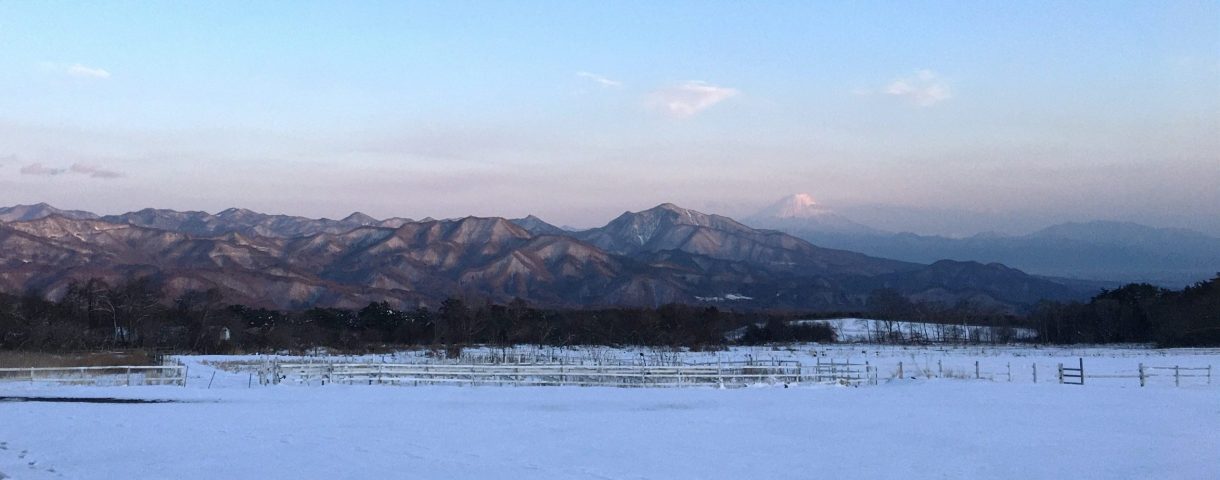
It was very clear in the morning, but now it is so foggy at the Fuji Subaru Line 5th Station (Yoshida Trail 5th Station) located in the Kamiyoshida district in the city of Fujiyoshida in Yamanashi Prefecture, Japan. However, the Fuji Subaru Line 5th Station was heavily crowded with international tourists, day-trippers, and sightseers. The Fuji Subaru Line 5th Station features busy souvenir shops, long lines for photos by landmark signs, and packed tour buses. I vividly remember that I was extremely shocked by the size of multi-story souvenir shops when I first visited the Fuji Subaru Line 5th Station. It was so unreal that I was in the middle of the tallest mountain in Japan. I believe that most people imagine a pristine, quiet mountain trail when thinking of Mount Fuji, so stepping off a bus into what feels like a high-altitude shopping mall is a massive cultural shock.
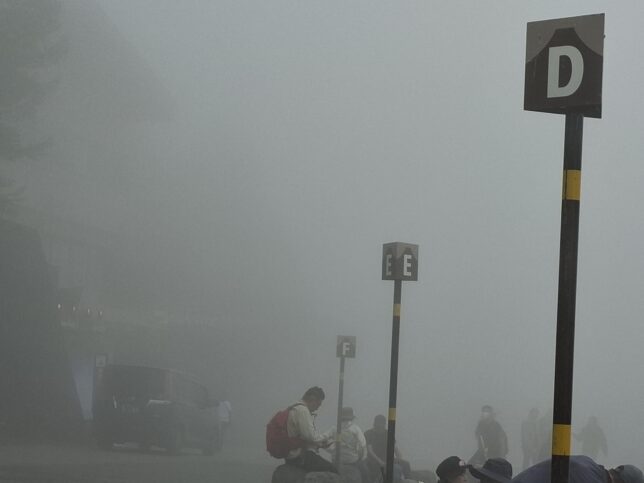
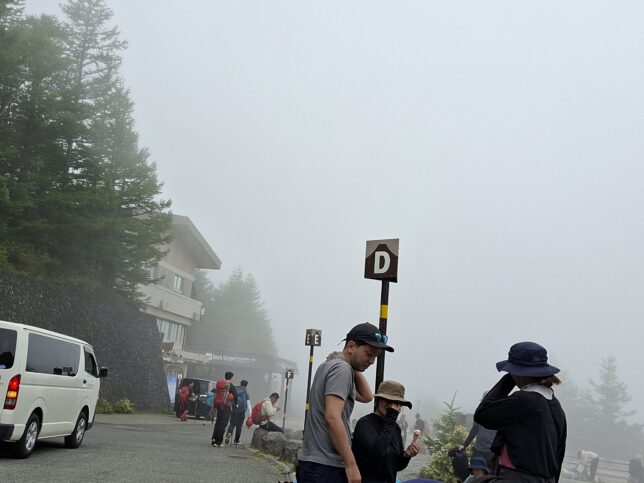
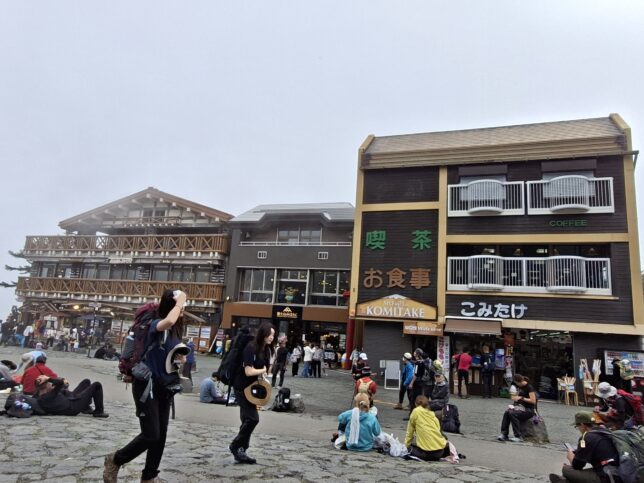
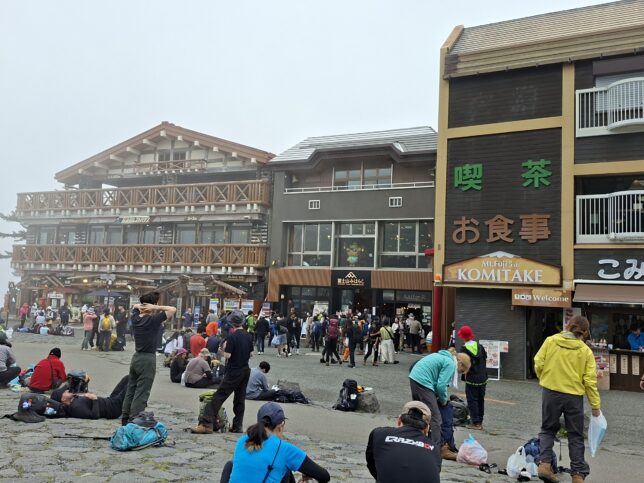
Fuji Subaru Line 5th Station with a crowd around the plaza in front of the souvenir shops, Fuji Subaru Line 5th Station, Kamiyoshida, Fujiyoshida city, Yamanashi, 8/18, 2026
Bustling Fuji Subaru Line 5th Station, Kamiyoshida, Fujiyoshida city, Yamanashi, 8/18, 2026
Next to the plaza, you can find some horses. They are waiting for customers. So, you can try a horseback ride here.
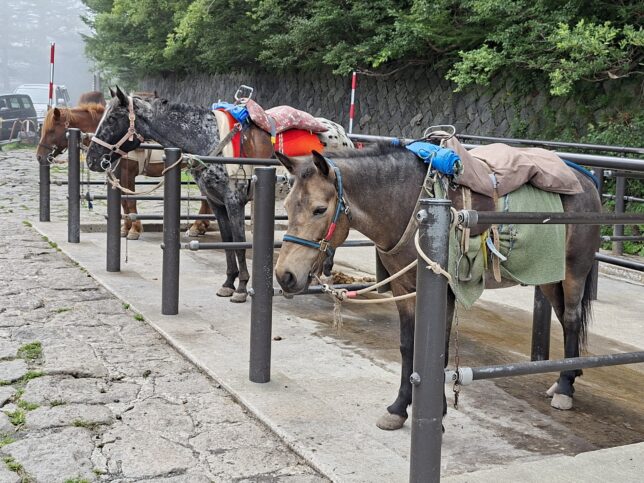
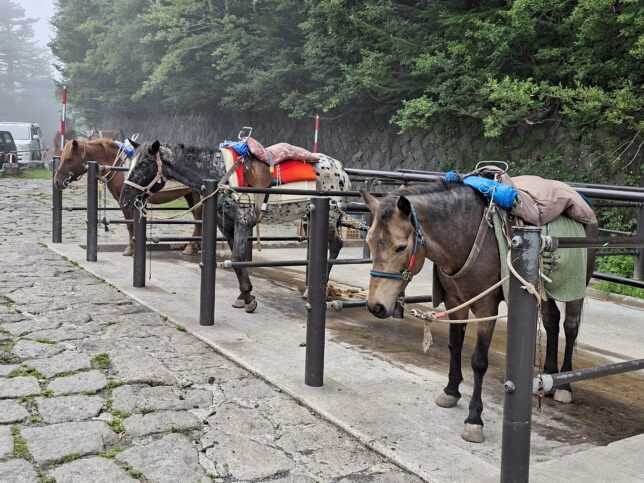
Horses for horseback riding, Fuji Subaru Line 5th Station, Kamiyoshida, Fujiyoshida city, Yamanashi, 8/18, 2026
Horses for horseback riding, Fuji Subaru Line 5th Station, Kamiyoshida, Fujiyoshida city, Yamanashi, 8/18, 2026
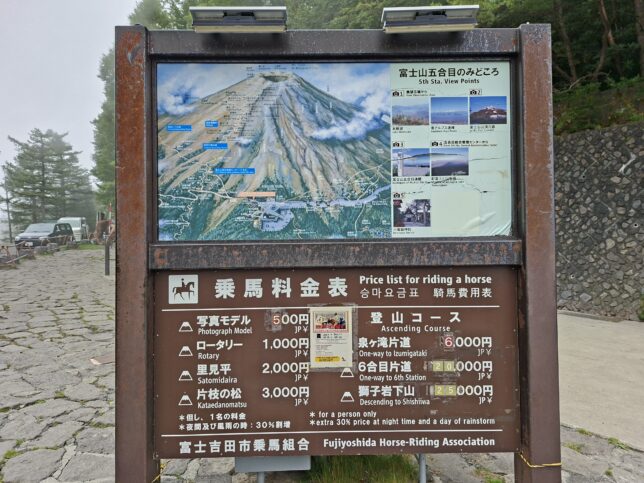
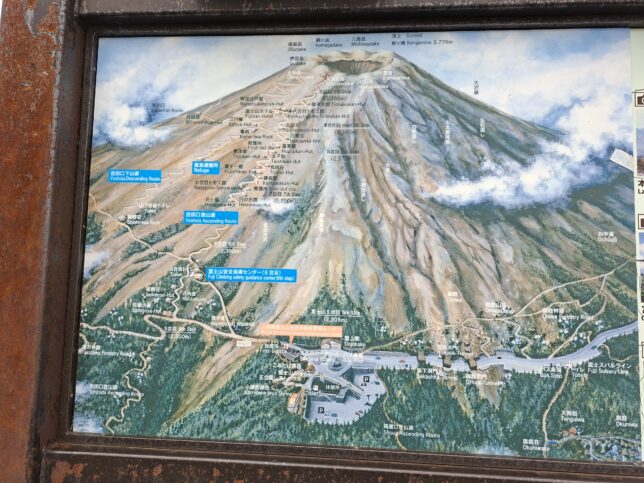
Sign of Mount Fuji Yoshida Trail, Fuji Subaru Line 5th Station, Kamiyoshida, Fujiyoshida city, Yamanashi, 8/18, 2026
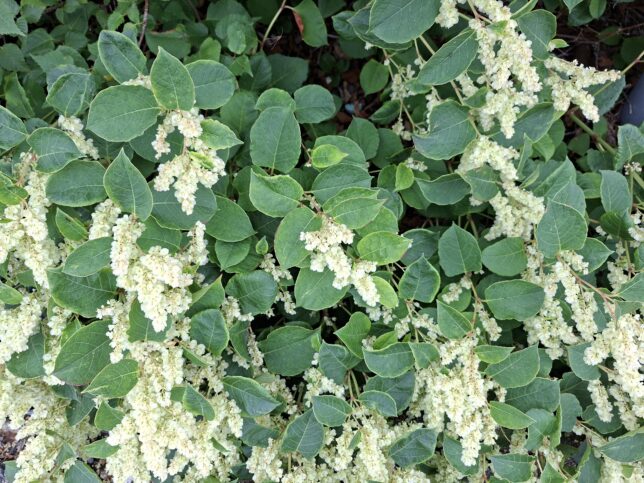
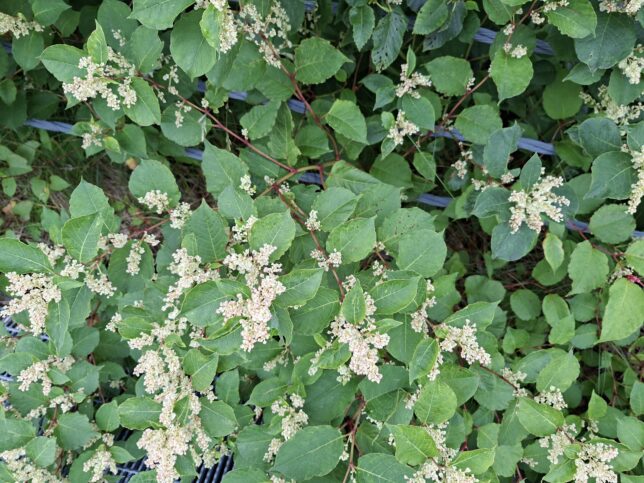
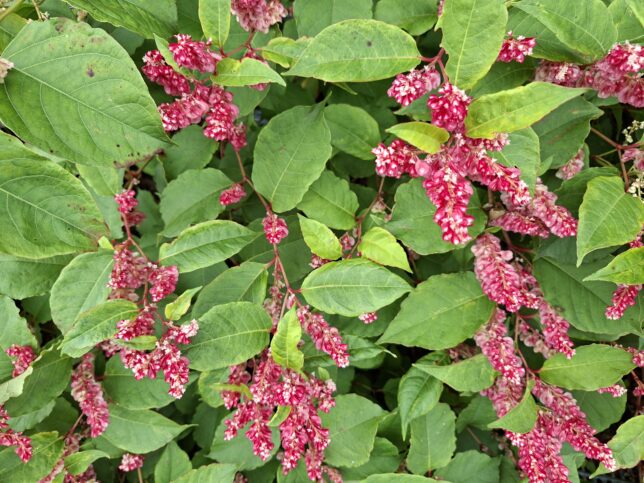
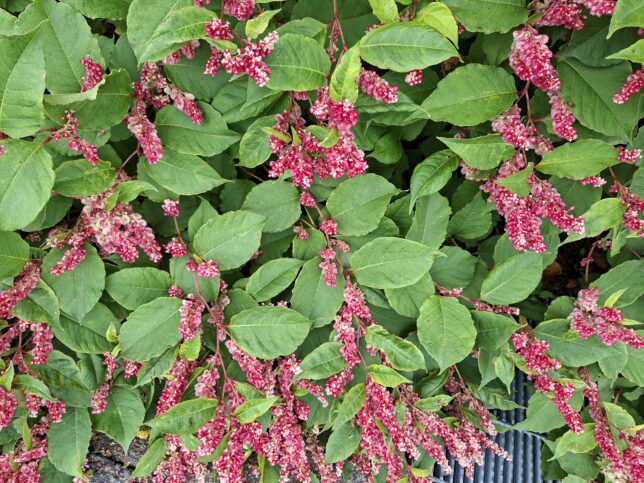
Japanese knotweed along roadsides, Fuji Subaru Line 5th Station, Kamiyoshida, Fujiyoshida city, Yamanashi, 8/18, 2026
Japanese knotweed (Reynoutria japonica), formerly Fallopia japonica and widely known in Japan as Itadori, is a large, fast-growing perennial plant native to East Asia. In Western countries, it is a notorious invasive pest, while in Japan, its young shoots are used in local cuisine and traditional medicine. On Mount Fuji, Japanese knotweed acts as a vital pioneer species. It stabilizes loose, shifting scoria and volcanic ash with its deep root (rhizome) networks, and its decomposing organic matter slowly builds rudimentary soil to help other native plants colonize the harsh volcanic slopes.
Japanese knotweed (Reynoutria japonica): https://en.wikipedia.org/wiki/Polygonaceae; https://en.wikipedia.org/wiki/Reynoutria_japonica; https://mikawanoyasou.org/data/itadori.htm; Reynoutria japonica Houtt. f. elata (Nakai) Hiyama: https://www.okadanouen.com/zukannormal/beniitadori.html